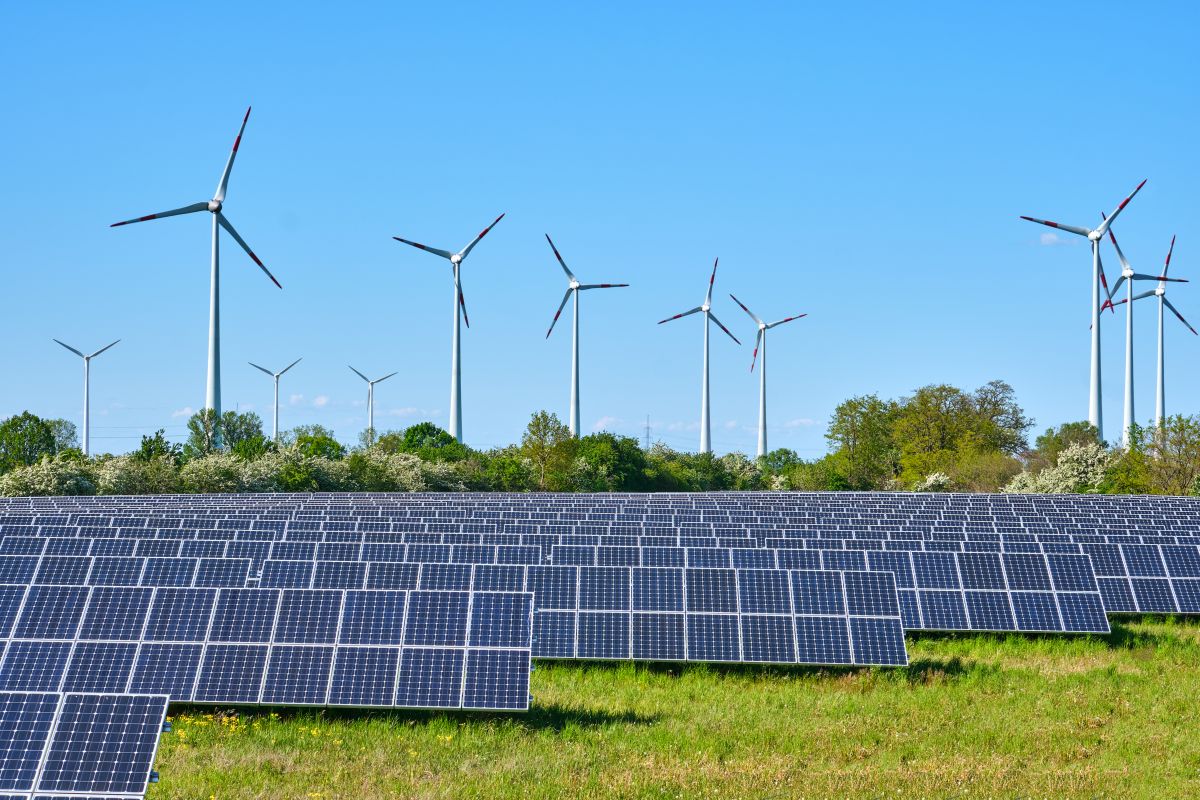


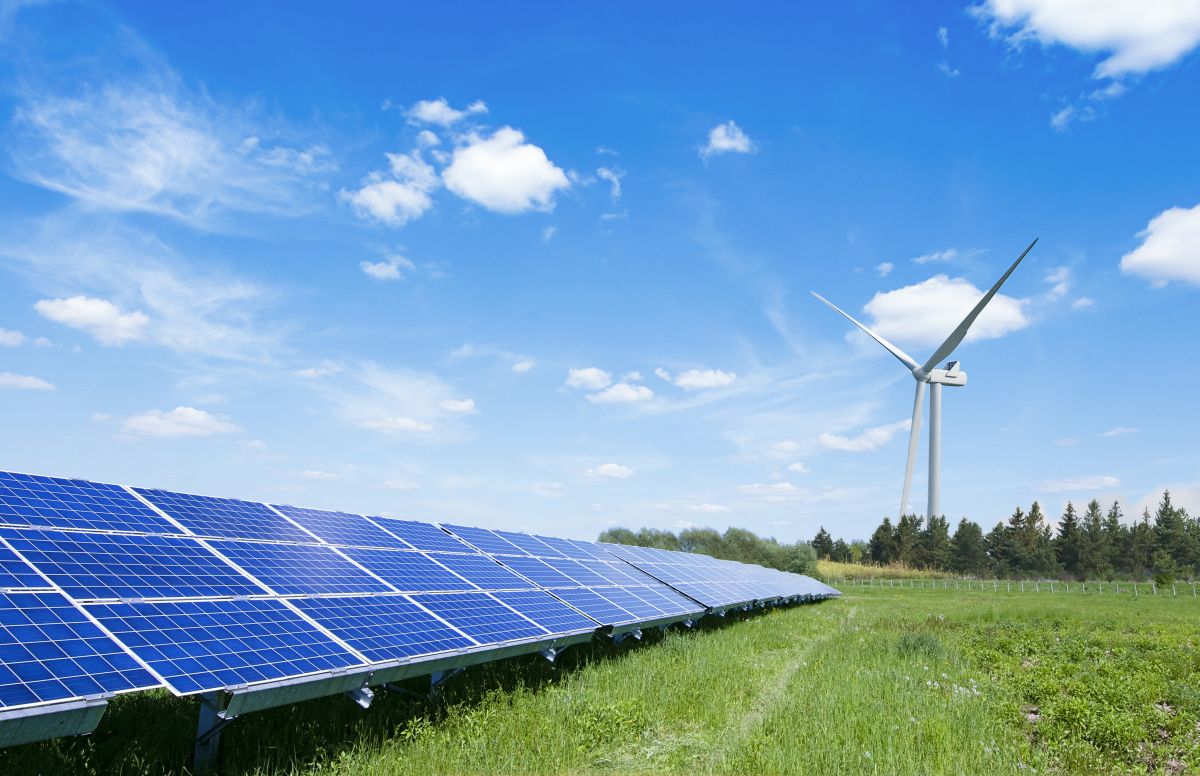
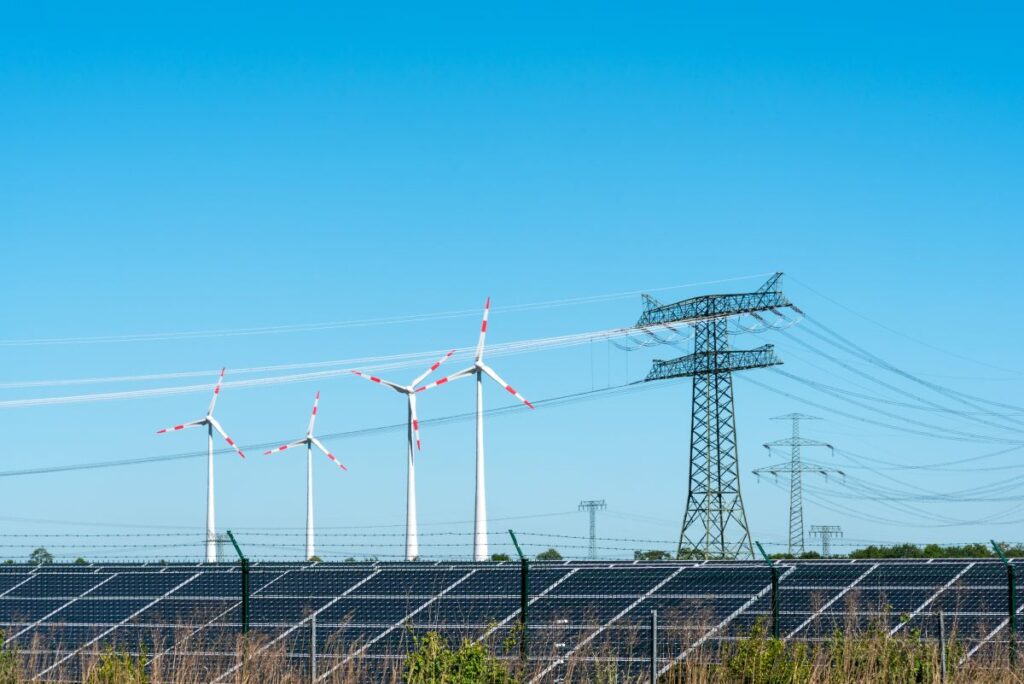
As technology advances, renewable sources transform the future of the U.S. power system and work toward global climate goals. In 2025, the renewable energy sources remained the second-largest contributor, generating a forecasted 1,058 billion kWh to the U.S. electricity sector according to the EIA Short-Term Energy Outlook. Wind and solar have been leading the energy mix, with hydropower, biomass, and geothermal providing continuous power to the grid.
Top 5 U.S. Renewable Energy Sources
Here are the top renewable energy sources that will enable the U.S. to have an ever-changing power industry. The table below is sorted based on net generation (GWh).
Rank | Renewable Source | YTD (Jan-Oct) 2025 Net Generation (GWh) | % of Total U.S. Electricity (YTD) | Notes / Source |
1 | Wind | 376,465 GWh | ≈ 9.9% | Highest among renewables in 2025, Year to Date (YTD). |
2 | Solar (Utility + Small) | 342,004 GWh | ≈ 9.0% | Includes utility- and small-scale solar. |
3 | Hydropower (Conventional) | 204,619 GWh | ≈ 5.4% | Traditional large-scale hydro. |
4 | Biomass | 38,459 GWh | ≈ 1.0% | Includes wood, biogenic MSW, and landfill gas. |
5 | Geothermal | 13,050 GWh | > 0.3% | Least among major renewables. |
Total Renewables (All Sources) | ~974,597 GWh | ~25.7% | All renewables combined share of total U.S. generation YTD. |
Credit: EIA Report and Energy Central.
Yearly EIA Data of U.S. Renewable Energy Sources
The following table is sorted by the annual data of EIA. It outlines trends in the share of renewables in total energy production across major U.S. energy sectors.
Year / Period | Wind + Solar (GWh) | Hydropower (GWh) | Biomass + Waste (GWh) | Geothermal (GWh) | Total Renewables (GWh) |
2019 (Annual) | 295,882 | 106,894 | 15,473 | 3,423 | ~421,672 |
2020 (Annual) | 337,938 | 130,721 | 15,890 | 3,531 | ~488,080 |
2021 (Annual) | 378,197 | 164,422 | 15,975 | 3,566 | ~562,160 |
2022 (Annual) | 434,297 | 205,074 | 16,087 | 3,600 | ~659,058 |
2023 (Annual) | 421,141 | 238,937 | 16,367 | 3,650 | ~680,095 |
2024 (Annual) | 756,621 | 242,226 | 16,500 | 3,700 | ~1,019,000 |
Credit: U.S. Renewable Energy Data.
EIA Prediction of U.S. Renewable Energy Sources
According to EIA, new utility-scale battery storage projects are helping renewables. They integrate onto the power grid, with battery storage capacity growing by 25% (11 GW) in 2026. It expects U.S. electricity generation from wind and hydropower to increase by 31 BkWh in 2026. Biomass wood, biogas, and solid waste make up a smaller proportion (~1% of total generation) but are significant sources of renewable electricity, particularly for industrial and combined heat-and-power applications.
Conclusion
The U.S. energy outlook is changing faster with the rise of renewable energy technologies such as wind and solar power. Using data from the EIA, the U.S. renewable energy adoption contributed roughly a quarter of the country’s total electricity generation in 2025. As with capacity, solar power will be the leading source of growth in U.S. electricity generation. EIA expects these capacity additions will increase U.S. solar generation by 17% in 2026, 49 BkWh.
FAQs
1. Do U.S. generation figures include small solar systems?
2. Why is wind ahead in renewables generation in the U.S.?
3. What influences future renewable rankings?
4. Is biomass significant in renewables?
5. How will solar & wind power generation rankings be in 2026?
Disclaimer: Any opinions expressed in this blog do not necessarily reflect the opinions of Certrec. This content is meant for informational purposes only.